

RETIREMENT IDENTITY REFLECTION ASSESSMENT

This reflection is a quick check in to help you explore how you are thinking about retirement beyond finances. It is not a test. It is a pause point to support clarity and intention as you move toward your next chapter.

HOW TO USE

Rate each statement from 1 to 5: 1 is not clear or not intentional and 5 is very clear and very intentional

Answer quickly. Trust your first response.

QUICK REFLECTION CHECK IN

I feel clear about who I am beyond my work role.

I feel a strong sense of meaning and purpose in my life today.

I feel clear about the values that guide my decisions.

I feel confident about the kind of lifestyle I want in retirement.

I am aware that retirement involves an identity shift, not only a financial shift.

I am thinking about what I am moving toward, not just what I am leaving.

I feel open to exploring uncertainty about my next chapter.

I am intentionally thinking about how I want to spend my time in retirement.

I feel confident I can design a meaningful next chapter.

REFLECTION PAUSE

Take a moment to notice your responses:

What stands out most?

Where do you feel strongest today?

Where do you feel least clear?

What is one area calling for your attention?


MOVING FORWARD

Clarity creates direction. You do not need all the answers today, you only need awareness of where you are starting from.

As you reflect on your responses consider what it would look like to design your next chapter with intention rather than assumption.

This is where your retirement transition becomes a conscious design and not a default experience.

More information can be found at https://www.powerupyourretirement.com/
Beyond Financial Readiness: A Reflection on Retirement as a Life Transition

When conversations about retirement come up, they often begin with finances and rightly so.

Financial readiness is a critical foundation.

But over time, a different layer of readiness begins to matter just as much.

I often refer to this as the shift from accumulation to activation not just preparing to retire, but preparing to live it fully.

And that shift raises a different kind of question: Not “Can I retire?” But “How do I want to live when I do?”

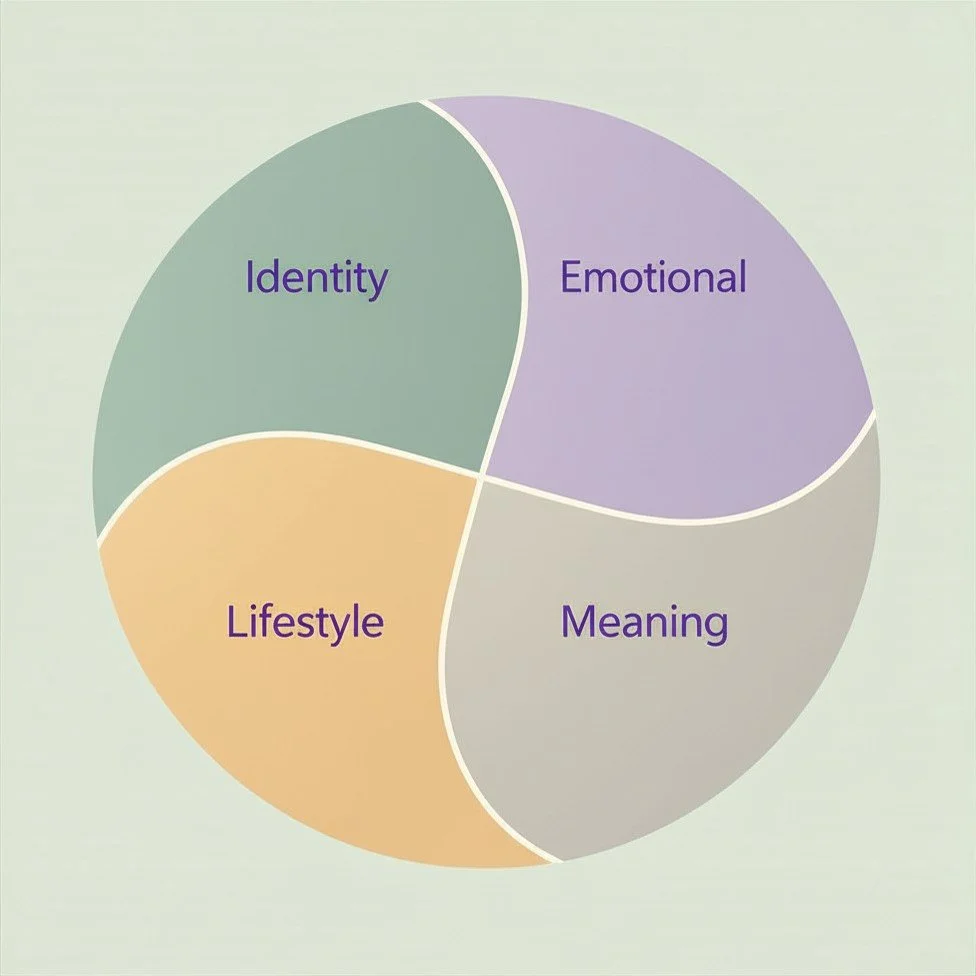
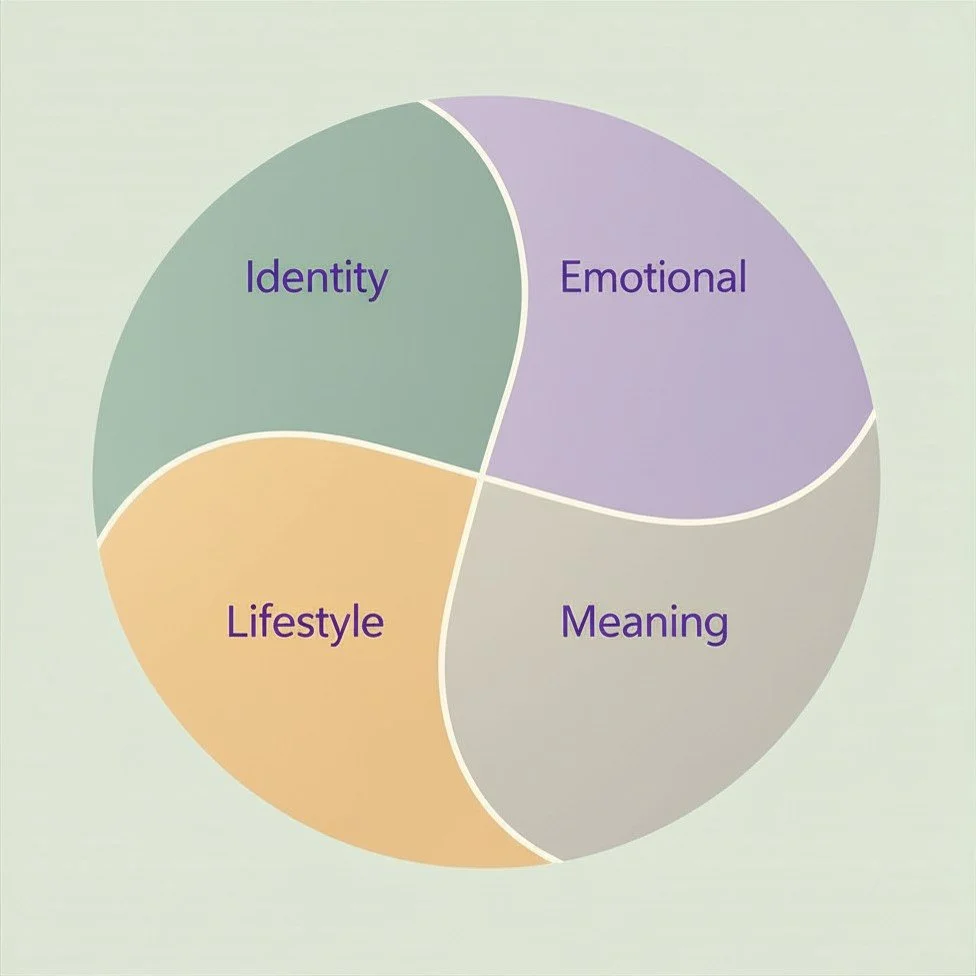
To explore that more deeply, I created a simple reflection tool that looks at retirement readiness through multiple dimensions not just financial, but also:

- identity readiness
- emotional readiness
- lifestyle readiness
- meaning readiness

It’s not a checklist or assessment.

It’s an invitation to pause and reflect on what this next chapter of life could look like with more intention.

I‘ve shared it in earlier blog for anyone who wants to take a closer look.

I’d be curious what part of retirement feels least explored in your own thinking right now?

Identity Shift: Who Am I Beyond My Work

Retirement is often framed as a financial milestone. But for many people, it is something deeper. It is a shift in identity.

If you are one to three years away from retirement, you may already feel it. A quiet question in the background. Who am I without my role?

For years, your work has provided more than a paycheque. It has shaped your sense of purpose, your daily structure, your relationships, and how you contribute. When that changes, it can feel both exciting and uncertain.

This is where many people get stuck. They focus on staying busy. Filling time. Keeping the same pace in a different form.

But a full calendar does not always lead to a meaningful life.

The Power Up approach invites something different. A shift from preparation to activation.

You’re not just retiring from something; you’re transitioning from something to something else. So instead of asking, “What am I retiring from?” start thinking about, “What am I stepping into or transitioning to?”

This is not about reinventing yourself. It is about building forward from who you already are. Your strengths, values, and life experiences do not disappear at retirement. They become the foundation for what comes next.

Taking time to reflect now makes a difference.

What has given you the greatest sense of meaning in your work and life?
What do you want more of in the years ahead?
Where do you want to invest your time, energy, and attention?

These are not abstract questions. They shape real choices. How you spend your days. Who you spend them with. What you say yes to.

Clarity creates confidence.

When you define who you are becoming, you move from drifting into retirement to actively shaping and designing it. Your next chapter becomes intentional, not accidental.

This is the essence of powering up your retirement lifestyle. You’re not just leaving a career, but stepping into a life that feels purposeful, engaging, and fully lived.

The PowerUp Retirement Readiness Model From Accumulation to Activation

Retirement is often framed primarily as a financial milestone. While financial readiness is essential, it is only one part of a much larger transition. Retirement is also a shift in identity, emotional experience, lifestyle, and meaning. Many individuals are financially prepared, yet find themselves underprepared for the lived experience of this next chapter. This reflection tool is designed to support a more holistic view of retirement readiness and help you consider what you are moving toward, not just what you are stepping away from.

A Shift to Consider

Financial readiness answers the questions: Can I retire?

This model invites another question: How do I want to live my life in retirement?

Retirement is a transition in identity, emotional experience, lifestyle, and meaning, not just income.

Four Dimensions of Retirement Readiness

Identity: Who am I beyond my professional role?

Emotional: How do I feel about this transition?

Lifestyle: How will I structure my time and energy?

Meaning: What gives my days purpose and direction?

Reflection Questions – Use the questions below to reflect on your next chapter.

1.      What am I truly saving for in this next chapter of life?

2.      Who am I beyond my professional role?

3.      How do I want my days to feel in retirement?

4.      What gives my life meaning outside of work?

5.      What parts of my identity am I ready to release or reshape?

6.      What will give structure and rhythm to my days?

7.      What does living well in retirement mean to me personally?

Retirement is not only a transition away from work. It is a transition into a different way of living. So, what are you transitioning to?

From Saving to Living: The Shift from Accumulation to Activation in Retirement

We often think about retirement as a financial milestone we prepare for over decades.

And financial readiness is essential as it creates the foundation for security and choice.

But increasingly, I’ve been exploring a deeper layer of the conversation:
What does it mean to move from accumulation to activation in retirement?

Not just preparing to retire but preparing to live it fully.

In my latest article, I explore this shift from saving to spending not only financially, but emotionally, psychologically, and experientially.

It touches on the idea that retirement is not simply an ending point in a career journey, but a transition into a different way of living where identity, rhythm, and meaning all come into focus.

In this view, retirement becomes less about stepping away from something and more about stepping into something more intentional.

You can read the full article here:

I’m curious, how are you thinking about retirement readiness beyond finances?

The Retirement Shift Most People Don’t Expect

Retirement is often described as a financial milestone. But in reality, it’s a transition of identity.

A shift from:
- earning to spending
- structure to self-directed time and
- achievement to meaning-making

Financial readiness answers one questions: ‘Can I retire?” But it doesn’t answer the deeper one: “Who am I when I am no longer defined by work?”

This is where many people discover retirement is not an ending but a redesign of identity, rhythm, and meaning.

And that redesign is often the part not everyone prepares for.

From Accumulation to Activation: Rethinking Retirement Readiness

We’ve spent decades asking an important question about retirement: “How much do I need to save?”

And rightly so as financial readiness is a critical foundation for retirement planning.

But there is another question that often emerges later in the conversation: “What am I saving for and how do I want to live this next chapter?”

For many people, retirement is being financially prepared but the change in lifestyle is less often explored.

And that gap often becomes visible when the structure of work disappears and life suddenly feels less defined.

I’ve been reflecting on what it means to move from accumulation to activation, not just preparing for retirement but preparing to live it fully.

More on this in the next post.

From Saving to Spending: Powering Up the Next Phase of Retirement

From saving to spending. For many people entering retirement, this shift is harder than expected, not financially, but psychologically.

Because for decades, saving isn’t just something you do. It becomes part of who you are: responsible, disciplined and future-focused.

So when the moment comes to start using what you’ve built, something unexpected can show up: guilt.

The feeling that spending is somehow “undoing” all the good work.

But this is not a financial problem, it's an identity transition.

Retirement asks something subtle but profound. Not just “Are you ready to retire?” but “Are you ready to live differently?”

One helpful reframe is this:

You are not spending down but rather you are activating a life you have already built.

Nothing is being lost. Your life is being lived.

This is where retirement becomes more than a milestone, it becomes a mindset shift.

This is the essence of Powering Up Your Retirement Lifestyle: shifting from preparation to activation, presence, and meaning.

From Saving to Spending: Powering Up the Next Phase of Retirement

Many individuals approach retirement believing the hardest part is building financial security. Yet, for some, the real challenge begins once that goal is achieved. A common and often unspoken experience is the feeling of guilt when shifting from saving to spending.

From a behavioural perspective, this makes sense. For decades, saving money is reinforced as a virtue—something responsible, disciplined, and even morally “right.” Over time, this becomes more than a habit; it becomes part of one’s identity. Saving can represent safety, control, and future readiness. When retirement arrives and that pattern must reverse, it can feel like breaking a deeply ingrained rule.

This is not a financial issue—it’s a psychological transition.

At its core, this guilt often stems from a misalignment between past conditioning and present reality. The mindset that once served so well is now being asked to evolve. Instead of accumulation, the focus shifts to utilization. Instead of preparing for life, it becomes about living it.

One helpful reframe is to view retirement not as “spending down,” but as “activating” what has been carefully built. These resources are not being lost, they are being used for their intended purpose. This shift can help move the narrative from scarcity toward fulfillment.

It is also important to recognize that identity is in transition. Letting go of the “saver” role does not mean abandoning responsibility; it means expanding into a new phase, one that includes enjoyment, contribution, and personal meaning.

Ultimately, the goal is not just financial readiness, but psychological readiness: the ability to trust that it is both safe and appropriate to fully step into the life one has worked so hard to create.

This is the essence of Powering Up Your Retirement Lifestyle, shifting from preparation to activation, presence, and purpose.

This perspective reflects the Redworks Coaching approach to retirement as a transition of identity and mindset, informed by behavioural psychology, behavioural economics, and transition theory.

Staying Connected in Retirement - Tip #5: Small Steps, Big Impact

Loneliness can show as fatigue, lack of interest, or feeling “slowed down.” These are not always signs of aging; they often reflect disconnection.

Tip #5 - Starting with small actions, like taking a short walk, tending a plant, or calling a friend, can lift energy and restore momentum, helping you enjoy your days more fully.

Question: What activities brighten your day?

Member Login
Welcome, (First Name)!

Forgot? Show
Log In
Enter Member Area
My Profile Not a member? Sign up. Log Out